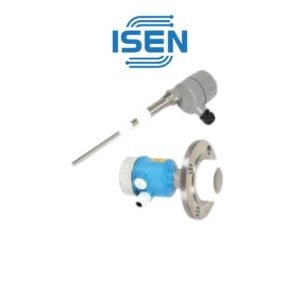
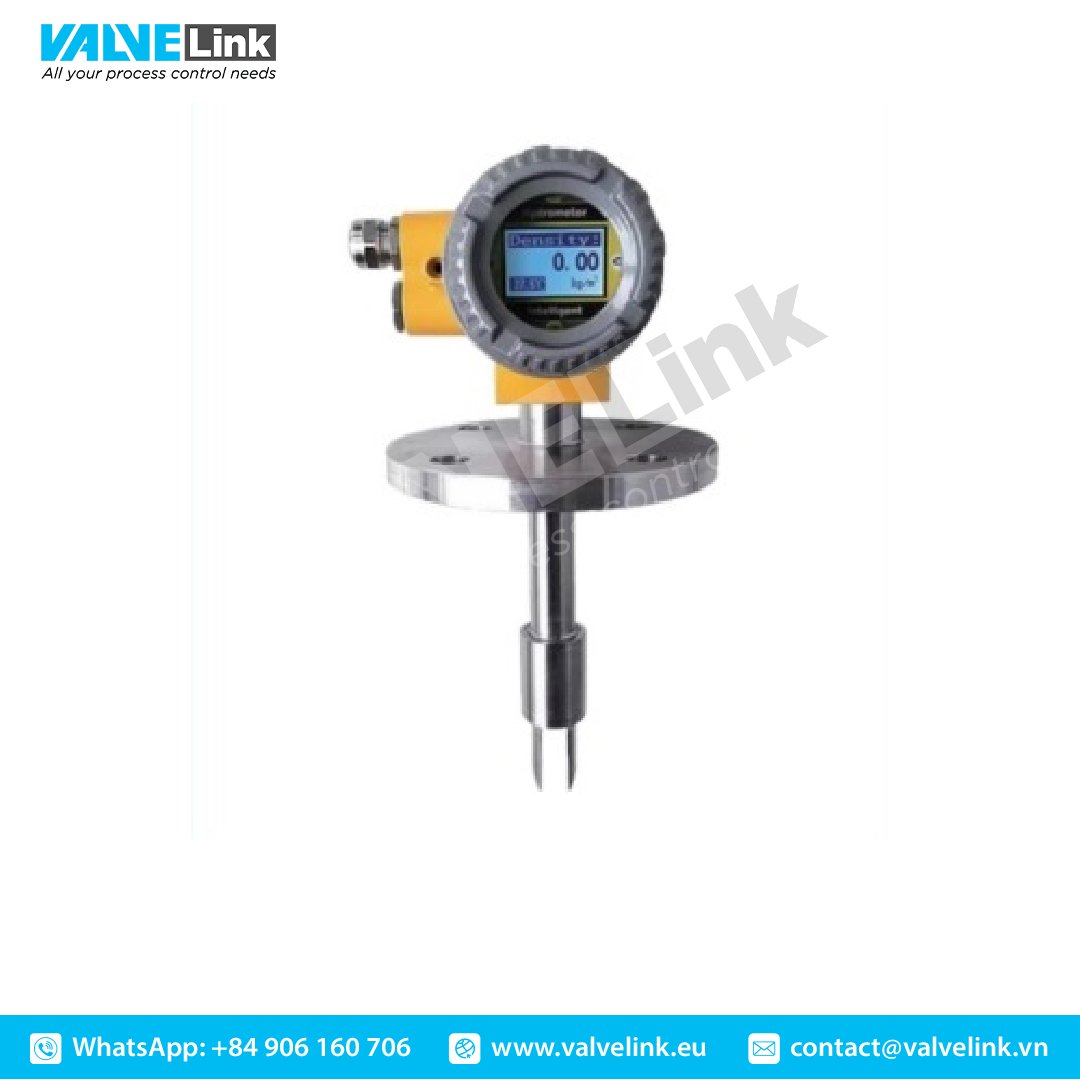
ISEN Tuning Fork Level Switch is a point-level detection device designed to detect whether a liquid, powder, or granular material has reached a defined level inside a tank, vessel, silo, or hopper. Instead of continuously measuring the level, the device provides a reliable switching signal when the material reaches or leaves the sensing point.
Using a vibrating fork as the sensing element, this type of level switch offers a simple and practical solution for high-level, low-level, overflow, and dry-run protection applications. It can be used across a wide range of industrial processes where dependable point-level detection is required.
What Is a Tuning Fork Level Switch?
A Tuning Fork Level Switch is an instrument used for point-level detection. Its main purpose is to determine whether the process medium is present at a specific location rather than continuously measuring the distance or volume of material inside a vessel.
The sensing element consists of a fork-shaped probe that vibrates at a defined frequency. When the process medium reaches the fork, the characteristics of its vibration change. The electronic circuit detects this change and switches the output signal accordingly.
This operating principle allows one device to perform different level detection functions depending on where it is installed. A switch positioned near the top of a tank can be used for high-level or overflow protection, while one installed near the bottom can be used for low-level detection or pump dry-run protection.
Tuning fork level switches can be applied to both liquids and bulk solids, making them suitable for many industrial storage and process applications.
How Does a Tuning Fork Level Switch Work?
The operating principle of a tuning fork level switch is based on vibration.
Inside the sensing element, the two fork-shaped tines are electronically excited so that they vibrate at their characteristic frequency. When the fork is surrounded by air or another normal operating environment, it maintains its expected vibration behavior.
When the process medium reaches and covers the fork, the surrounding conditions change. The medium affects the fork’s vibration, including its frequency and amplitude. The electronics recognize this change and interpret it as a change in level.
The switching process can be simplified into four steps:
- The fork continuously vibrates.
- The process material reaches the sensing element.
- The vibration characteristics change.
- The electronics change the output state.
When the material moves away from the fork, the sensing element returns to its original vibration condition and the output can switch back.
Because detection is based on the physical behavior of the vibrating fork, the system does not require a conventional mechanical float or moving mechanism inside the process.
Point-Level Detection for Liquids and Bulk Solids
One of the main advantages of tuning fork technology is its flexibility across different types of process media.
For liquid applications, the switch can be installed on tanks, vessels, pipelines, or other process equipment to detect a defined liquid level. Typical applications include water, wastewater, oils, chemicals, and other compatible process liquids.
For bulk solids, the same principle can be used to detect the presence or absence of powders and granular materials. This makes tuning fork level switches useful for silos, hoppers, storage bins, and process vessels.
Typical detection functions include:
- High-level detection
- Low-level detection
- Overflow protection
- Pump dry-run protection
- Material presence detection
- Empty-vessel detection
- Level alarm switching
The important distinction is that a tuning fork level switch provides point-level information. For example, it can indicate that material has reached a high-level point, but it does not normally provide a continuous measurement such as 35%, 50%, or 75% of tank capacity.
For applications that require continuous level measurement, a level transmitter or another continuous measurement technology may be more appropriate.
Key Advantages of Vibrating Fork Level Detection
The vibrating fork principle provides several practical advantages for industrial level detection.
First, there are no conventional mechanical float components that need to move with the changing level. The sensing principle relies on vibration, allowing the device to perform point-level detection without a mechanical float mechanism.
Second, the operating principle is relatively straightforward. The switch detects the change between the fork being uncovered and covered by the process medium. This makes it suitable for applications where a simple switching signal is sufficient.
Another advantage is application flexibility. Tuning fork technology can be used with many types of liquids and bulk solids when the selected configuration is suitable for the process conditions.
The device can also support important process protection functions. A switch installed at the upper level of a tank can provide a signal when the vessel approaches an unwanted high level. A switch installed near the bottom can help identify an empty or low-level condition.
This makes the technology useful not only for level indication but also for process protection and equipment control.
Typical Applications of Tuning Fork Level Switches
Tuning fork level switches are commonly considered when an industrial process needs a dependable signal at a predetermined level.
In liquid handling systems, typical applications include storage tanks, water treatment equipment, chemical processing systems, pump stations, and process vessels. The switch can provide high- or low-level detection depending on the installation position.
In bulk-solid handling, applications can include silos, hoppers, bins, and storage vessels containing powders or granular products. Industries handling grains, plastics, chemicals, minerals, and other bulk materials can use point-level detection to determine when material has reached a defined point.
Common applications include:
- Tank overflow protection
- High-level alarms
- Low-level alarms
- Pump protection
- Silo level detection
- Hopper level monitoring
- Powder presence detection
- Granular material detection
- Empty-vessel detection
- Automatic process control
The correct application depends on the properties of the medium and the process environment. Factors such as density, particle characteristics, viscosity, temperature, pressure, and installation conditions should be considered before selecting the appropriate configuration.
How to Select an ISEN Tuning Fork Level Switch
Selecting a tuning fork level switch should begin with the process medium. Determine whether the application involves a liquid, powder, or granular solid and understand how the medium behaves when it contacts the sensing fork.
For liquids, viscosity, density, tendency to foam, and possible coating on the sensing element can be important. For bulk solids, particle size, bulk density, flow characteristics, and the possibility of material buildup should be considered.
The installation location is also important. A high-level application may require the switch to be installed near the top of a vessel, while low-level or dry-run protection may require installation near the bottom.
Process conditions should also be reviewed, including:
- Process temperature
- Operating pressure
- Medium characteristics
- Tank or vessel construction
- Installation position
- Process connection
- Wetted material compatibility
- Electrical power requirements
- Output signal requirements
- Environmental conditions
For demanding industrial applications, the selected configuration should also be checked against the actual operating conditions rather than relying only on general product specifications.
ISEN Tuning Fork Level Switch provides a practical approach to point-level detection where the process requires a clear switching signal rather than continuous level measurement. By selecting the appropriate configuration for the medium, installation point, and operating conditions, the technology can be integrated into a wide range of industrial level monitoring and protection systems.