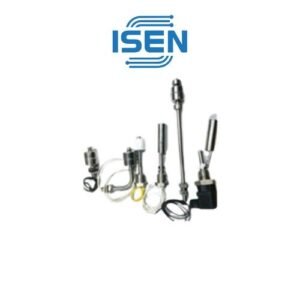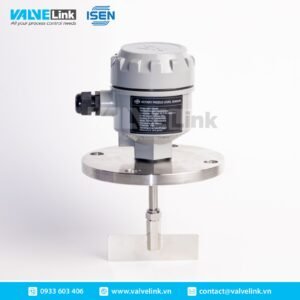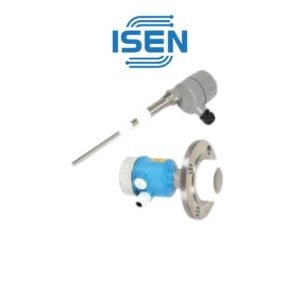
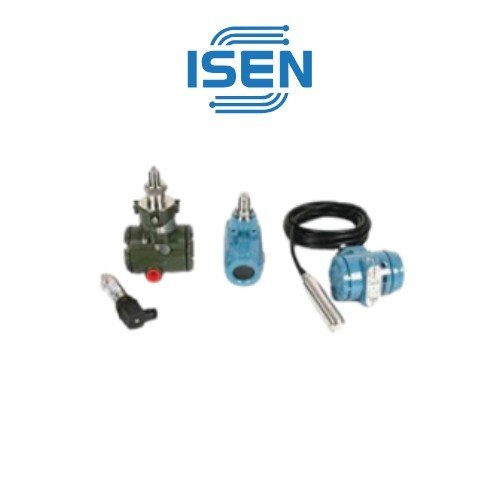
ISEN Pressure Level Transmitter is a submersible liquid level measurement solution designed to measure the height of liquids in tanks, wells, reservoirs, rivers, and other process environments. The transmitter measures liquid level indirectly through hydrostatic pressure and converts the measured pressure into a standard electrical output for connection to PLCs, displays, control systems, and other industrial equipment.
The product uses a pressure-sensitive sensing element and temperature compensation technology to provide stable level measurement across different operating environments. Depending on the selected configuration, the transmitter can be supplied with a digital display, different probe materials, various connection methods, and standard 4–20 mA, HART, or RS485 communication options.
For applications requiring continuous liquid level information rather than simple high/low level switching, the ISEN Pressure Level Transmitter provides a practical way to convert liquid depth into a signal that can be monitored and processed by an automation system.
Hydrostatic Pressure Principle for Liquid Level Measurement
The ISEN Pressure Level Transmitter determines liquid level from the relationship between liquid depth and static pressure. In a liquid, pressure increases as the depth increases. The transmitter detects this pressure through its sensing diaphragm and converts it into an electrical signal.
The catalog describes the measurement relationship as liquid density multiplied by gravitational acceleration and liquid depth. In simple terms, the deeper the sensor is submerged, the greater the hydrostatic pressure acting on it. By measuring this pressure, the transmitter can calculate the corresponding liquid level.
The sensing element uses either a diffused silicon or ceramic sensing technology, depending on the selected configuration. The liquid pressure is introduced to the positive pressure side of the sensor, while atmospheric pressure at the liquid surface is connected to the negative pressure side. This allows the transmitter to compensate for changes in atmospheric pressure rather than treating atmospheric pressure as part of the liquid level.
After temperature compensation and linear correction, the measured pressure is converted into a standard 4–20 mA output signal. This provides a convenient interface with industrial control equipment and makes the transmitter suitable for continuous level monitoring.
Because the transmitter measures the actual hydrostatic pressure generated by the liquid column, the measuring range can be selected according to the required liquid depth.
Continuous Level Monitoring from Tanks to Deep Wells
The ISEN Pressure Level Transmitter is designed for applications where the liquid level needs to be measured continuously. The catalog lists measurement ranges from 0–5 m, 0–10 m, 0–15 m, 0–20 m, 0–25 m, and 0–30 m, with additional ranges up to approximately 100 m available in the technical specification and customized ranges also supported.
The submersible configuration can be installed directly into the liquid. The sensing probe is lowered to the required measurement position, while the cable provides both electrical connection and pressure reference through its pressure-guiding structure.
This makes the transmitter suitable for different types of liquid storage and monitoring systems, including:
- Water tanks and reservoirs
- Fire water tanks
- Deep wells
- Rivers and lakes
- Sewage treatment systems
- Irrigation pools and canals
- Oil pools and storage tanks
- Acid and alkali tanks
- Industrial process vessels
The catalog specifically identifies applications in petrochemical facilities, water supply and drainage systems, sewage treatment plants, agricultural irrigation, water wells, geothermal wells, and mining environments.
For deep wells and underground applications, the submersible design allows the sensing element to remain below the liquid surface while continuously transmitting the measured level to equipment installed above ground.
Construction, Materials and Environmental Protection
The ISEN Pressure Level Transmitter is designed for long-term operation in demanding liquid measurement environments. The product structure incorporates a sensing diaphragm, electronic circuit, housing, cable, and sealing components.
The catalog specifies 316L stainless steel for the sensor diaphragm material, while the housing can use die-cast aluminum. Different cable sheath materials are also available, including polyethylene rubber, stainless steel, nitrile rubber, and PTFE, depending on the selected configuration.
The probe is designed with multi-layer sealing to help prevent liquid penetration. The specified protection rating is IP68 for the probe, while the entire unit is listed as IP65 in the technical specification.
For applications involving corrosive media, the product family includes anti-corrosion configurations and PTFE-related material options. However, the catalog notes that standard versions should be used only with media that are not corrosive to silicon and stainless steel, except for specially designed anti-corrosion types.
The transmitter also incorporates protection features including reverse-polarity protection and current-limiting protection. The catalog additionally describes resistance to lightning and impact, as well as intrinsic-safety and explosion-proof options for applicable configurations.
These options allow the transmitter to be configured for different liquid characteristics and installation environments rather than relying on a single fixed construction.
Output Signals, Power Supply and Communication
The standard output of the ISEN Pressure Level Transmitter is 4–20 mA, providing a widely used analog signal for industrial level monitoring and control.
Depending on the selected configuration, the transmitter can also provide 4–20 mA with HART or RS485 communication. The catalog specifies that the RS485 version uses the MODBUS-RTU protocol, allowing the transmitter to communicate with compatible industrial monitoring and control equipment.
An integrated configuration can also provide simultaneous 4–20 mA and RS485 output. According to the catalog, these two signals can coexist when the RS485 load impedance is appropriate.
The specified supply voltage is 8–30 VDC for the technical specification, while the selection chart identifies a 24 VDC power supply configuration. Accuracy options include 0.25% FS and 0.5% FS. The allowable overload is specified as 150% of the standard range.
The transmitter can therefore be integrated into systems using PLCs, meters, display controllers, and other industrial automation equipment. The 4–20 mA signal provides continuous level information, while RS485/MODBUS-RTU can be used when digital communication is required.
Installation and Wiring Considerations
Correct installation is important for obtaining stable and reliable liquid level measurements. For the submersible version, the transmitter should be installed in a location that is easy to operate and maintain and should be positioned away from significant vibration and heat sources.
When installing the immersion-type transmitter, the catalog instructs that the metal probe should be submerged toward the bottom of the container. A cable hanger or fixing flange can be used to support the installation and manage the cable.
The transmitter also uses pressure-guiding holes to balance internal and external pressure. These openings must remain unobstructed and should be protected from flooding and moisture according to the installation instructions.
For electrical wiring, the catalog recommends using twisted-pair signal cables. Where electromagnetic interference is significant, shielded cables and proper grounding are recommended. Signal lines should be kept away from strong electrical equipment and should not share cable routes with power lines where this could introduce interference.
The transmitter’s electrical housing should also be properly sealed to prevent moisture accumulation. If the threading holes cannot be sealed, they should face downward to allow liquid to drain rather than accumulate inside the housing.
These installation details are particularly important for submersible level transmitters because the sensing element remains exposed to the liquid and the cable must maintain both electrical and pressure-reference functions.
Applications and Selection Guide
The ISEN Pressure Level Transmitter can be used across water, environmental, industrial, agricultural, energy, and chemical applications where continuous liquid level measurement is required.
For water and wastewater systems, it can monitor reservoirs, sewage treatment facilities, urban water supply and drainage systems, wells, and other water infrastructure. In agricultural irrigation, it can measure the level of irrigation pools and canals to support water management.
In petrochemical applications, the catalog identifies liquid level monitoring in oil pools and oil tanks. For underground applications, the transmitter can be used in water wells, geothermal wells, and mining environments to measure liquid depth and support operational safety.
For industrial chemical processes, suitable anti-corrosion configurations can be selected for applications involving corrosive liquids. The actual probe and sealing materials should be selected according to the chemical compatibility of the measured medium.
Selection should consider the required measurement range, output signal, accuracy, power supply, operating temperature, connection method, probe material, sensor technology, cable sheath, and explosion-proof requirements. The catalog provides configurations using diffused silicon or ceramic sensors, 304/316L stainless steel and PTFE-related materials, and threaded or flange-mounted installation options.
Valvelink can help you select the appropriate ISEN Pressure Level Transmitter configuration based on the liquid being measured, tank or well depth, installation method, required output, operating temperature, and environmental conditions. This ensures the selected transmitter is matched to the actual application rather than simply choosing a measurement range based on liquid depth alone.